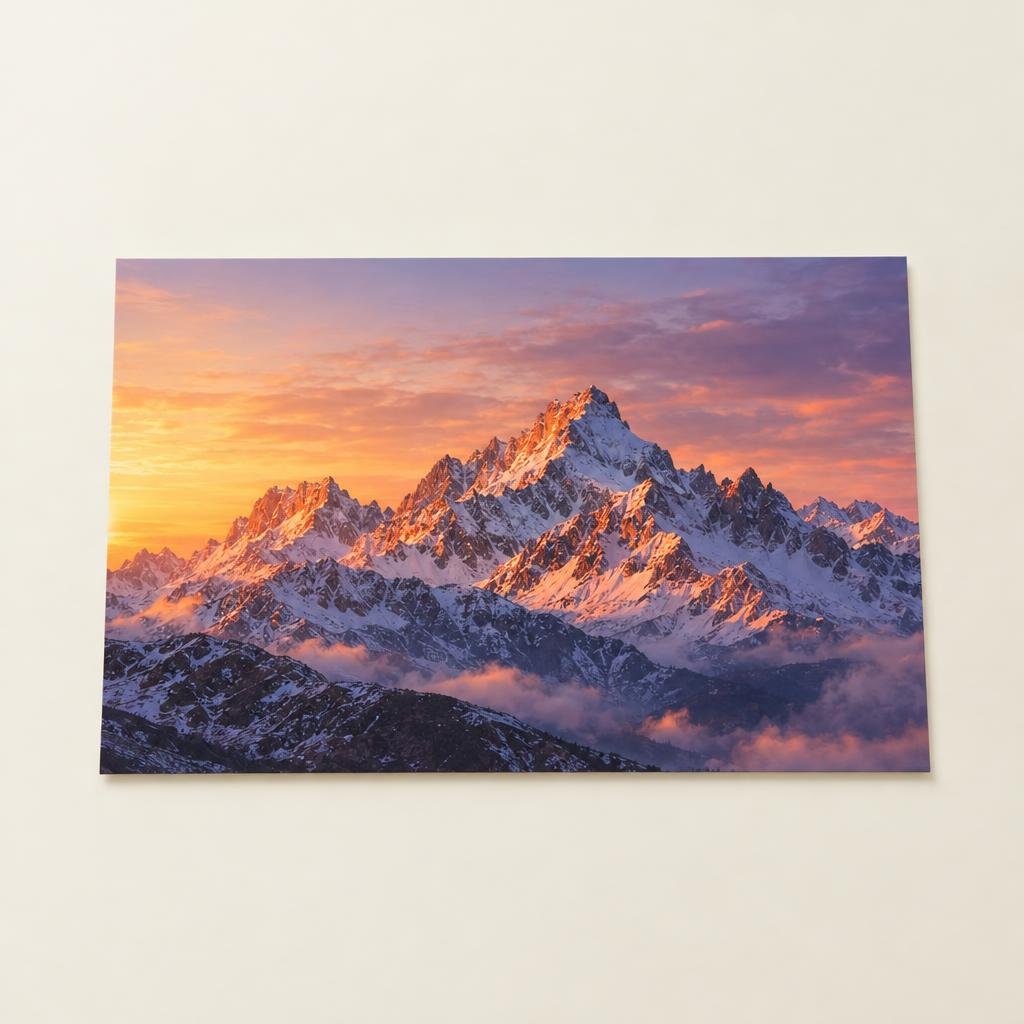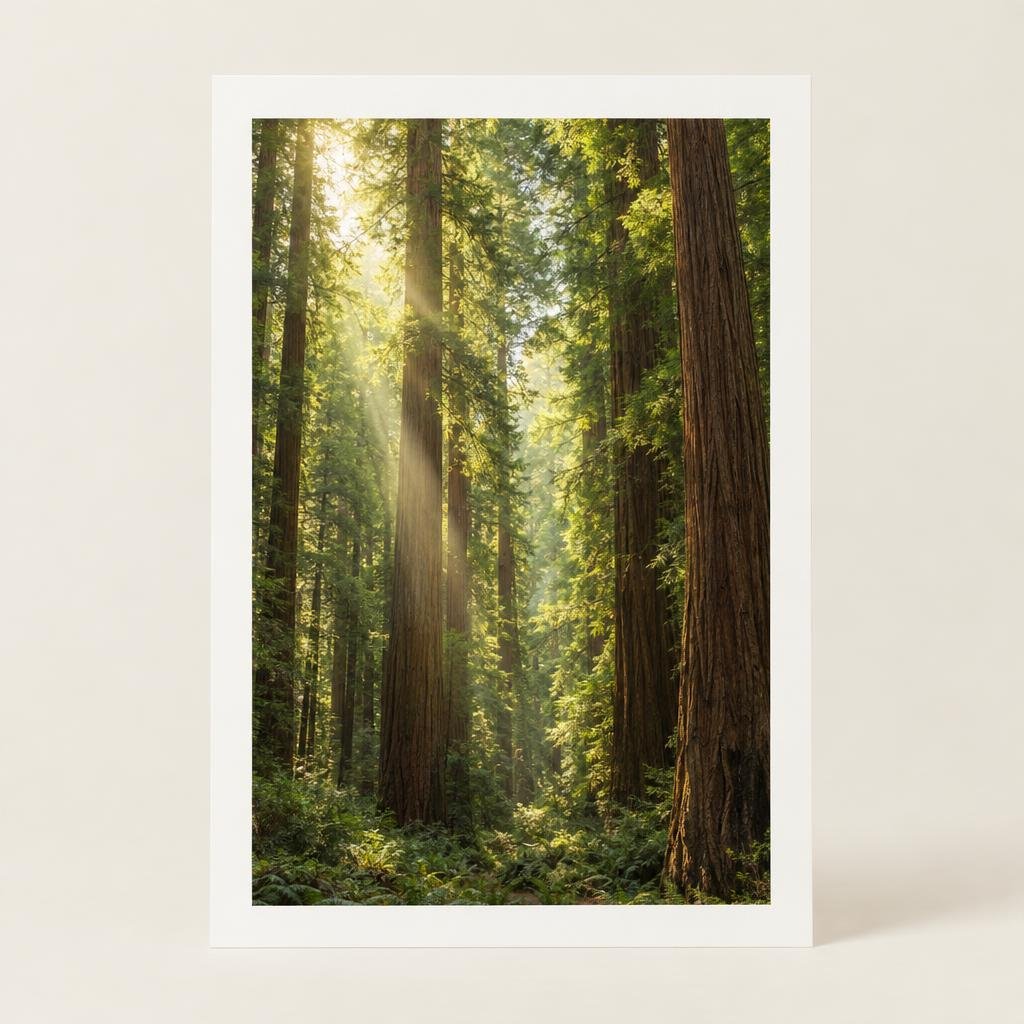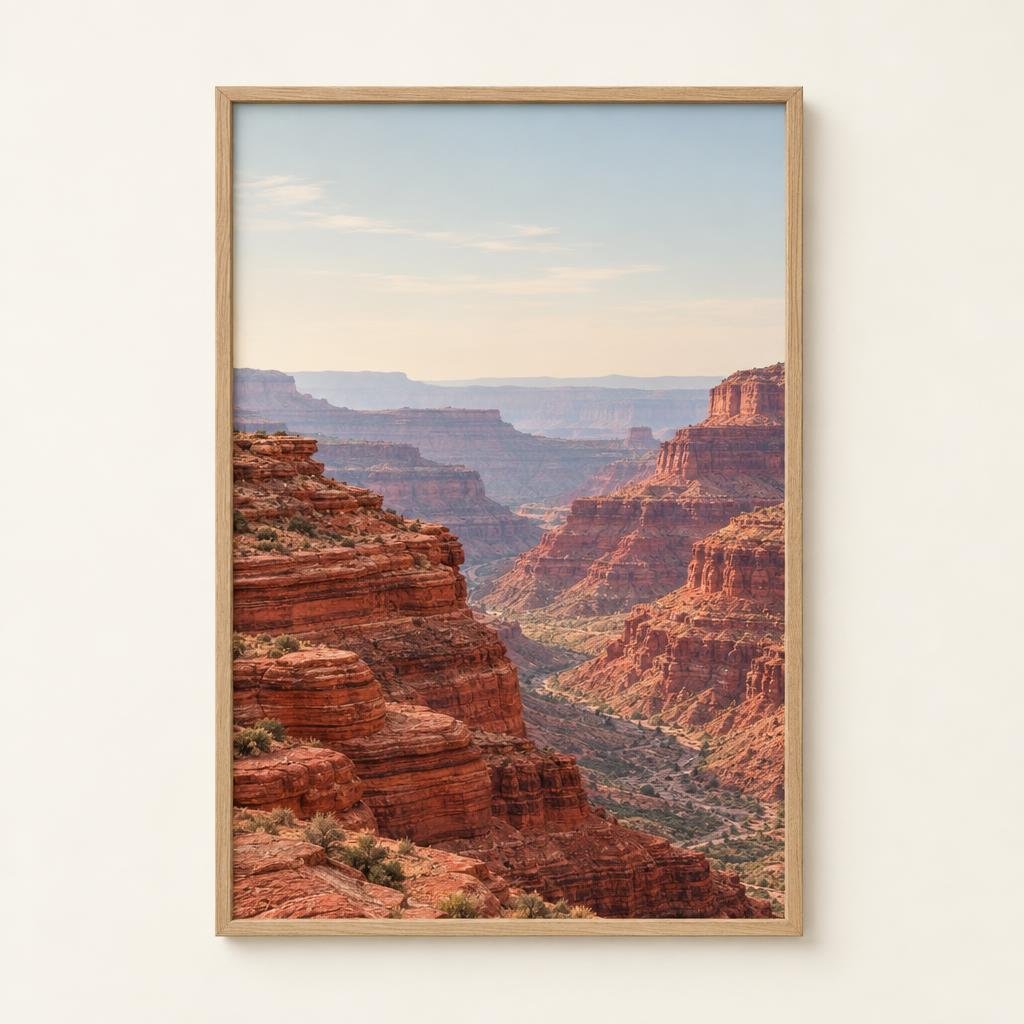
Paper remembers how it has been kept. A print stored rolled tightly for months will want to curl, and a print kept flat will stay calm. That is one reason we prefer to ship prints flat, and it is a good habit to carry on at home. Paper is made of fibers that settle into whatever shape they are held in, so the way you store it matters.
Think of a print as a sheet that is always slowly adjusting to its surroundings. Heat, moisture and pressure all nudge it one way or another. Flat storage asks very little of the paper, which is why it tends to keep its surface smooth and its corners sharp. Most of the trouble people have with prints comes from asking paper to hold an awkward position for a long time.
A portfolio folder is the simplest way to store unframed prints. It keeps dust off, holds the stack square, and lets you flip through your collection like a book. Linen covers feel good in the hand and look fine on a shelf or desk. A folder also gives you one place to look, so prints are not left leaning in corners.
When choosing a folder, look at how it closes and how deep it is. A folder that is too small will bend the corners of larger sheets, and one that is far too big lets prints slide around. Choose a size slightly larger than your biggest print. Stiff sides help the stack stay level, and a snug tie or flap keeps it closed.
Stacking and Handling with Care
If you stack prints, keep the largest at the bottom and the smaller ones on top. Slip a sheet of clean paper between them if the ink is heavy, so surfaces do not rub. Handle each print by its edges, because oils from fingers can leave marks on paper. These small habits cost nothing and prevent most of the scuffs that show up later.
The reason for the largest-on-the-bottom rule is support. A small print resting under a big one has its weight pressed unevenly, and the overhanging edges of the larger sheet can crease or dent. With the big print underneath, every sheet above it is fully supported. Keep the stack modest in height too, since a very tall pile puts steady pressure on whatever is at the bottom.
Interleaving paper deserves a word. Plain, clean paper works well, and tissue is a common choice for the same job. The point is to stop one surface from sliding against another, because heavy ink areas can pick up a faint sheen or transfer slightly when pressed together for a long period. Avoid anything printed or colored for this, since its own ink can rub off onto your art.
Clean hands are the other half. If you have just been cooking or using hand cream, wash and dry your hands before touching paper. When you lift a print, hold it by two opposite edges and let it hang in a gentle arc rather than pinching one corner. Large sheets bend easily, and a sharp kink in the middle never fully disappears.
Keeping Paper Dry and Dark
Store them somewhere dry. Damp air makes paper ripple and can cause spotting over time. A shelf in a bedroom or study usually works better than a basement or a garage, where humidity changes a lot. Paper takes in moisture from the air and gives it back again, and each cycle can leave it a little more wavy than before.
Steady conditions matter more than perfect ones. A room that stays about the same through the seasons is kinder to paper than one that swings between damp and dry. Avoid shelves against an outside wall, and keep prints off the floor, where a spill or a damp patch can reach them first. Raising the folder onto a shelf is an easy fix.
Light is the other quiet enemy. Sunlight fades inks, and bright colors can shift over time when they sit in a window. Even a folder on an open shelf is safer than a print left in direct sun. If you want to enjoy a print on display, choose a spot with soft, indirect light and rotate your favorites now and then.
Keep an eye out for what your storage is made of. Cardboard boxes and folders made from ordinary board can give off acids that slowly yellow paper sitting against them. Folders and sleeves described as acid-free are a better choice for anything you plan to keep for years. A clean sheet of paper between the print and the board adds a little more protection.
Rolling and Posting
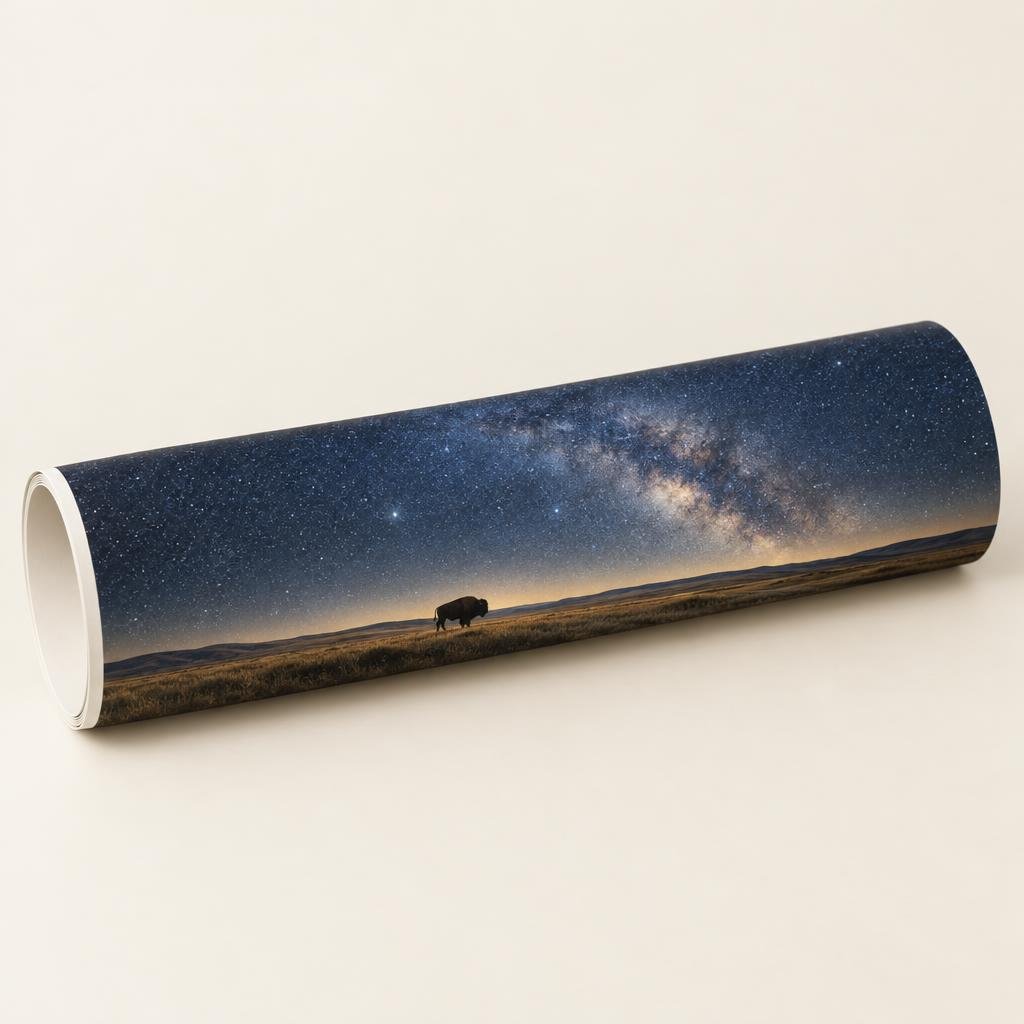
If you do need to roll a print, roll it loosely with the image facing out, and use a tube that is wide enough to avoid a tight curl. When you unroll it, lay it flat and weigh the corners with clean books for a day or so. Most gentle curls relax with a little patience. Never put rubber bands directly on the paper, since they leave dents and can mark the surface.
A common mistake is forcing a print flat while it is still tightly wound. Let it rest and open on its own first. Bending it back hard against the curl can crease the paper, and a crease is much harder to fix than a curl. Patience and a little weight do the work, and a day under clean books beats any quick trick.
For posting a print to a friend, flat is best, with stiff board on both sides to prevent bending. Recycled packaging does the job as well as new, as long as it is sturdy and dry. Write the contents on the outside so the parcel is handled with care. Seal the edges well, so nothing can slip out or let moisture in.
Good storage is a quiet way to respect the artwork. A few minutes spent setting up a folder or a shelf saves the sadness of finding a favorite print creased or faded. Keep them flat, dry and out of the sun. Do that, and a print you love today will look much the same in years to come, ready to be pulled out and enjoyed.